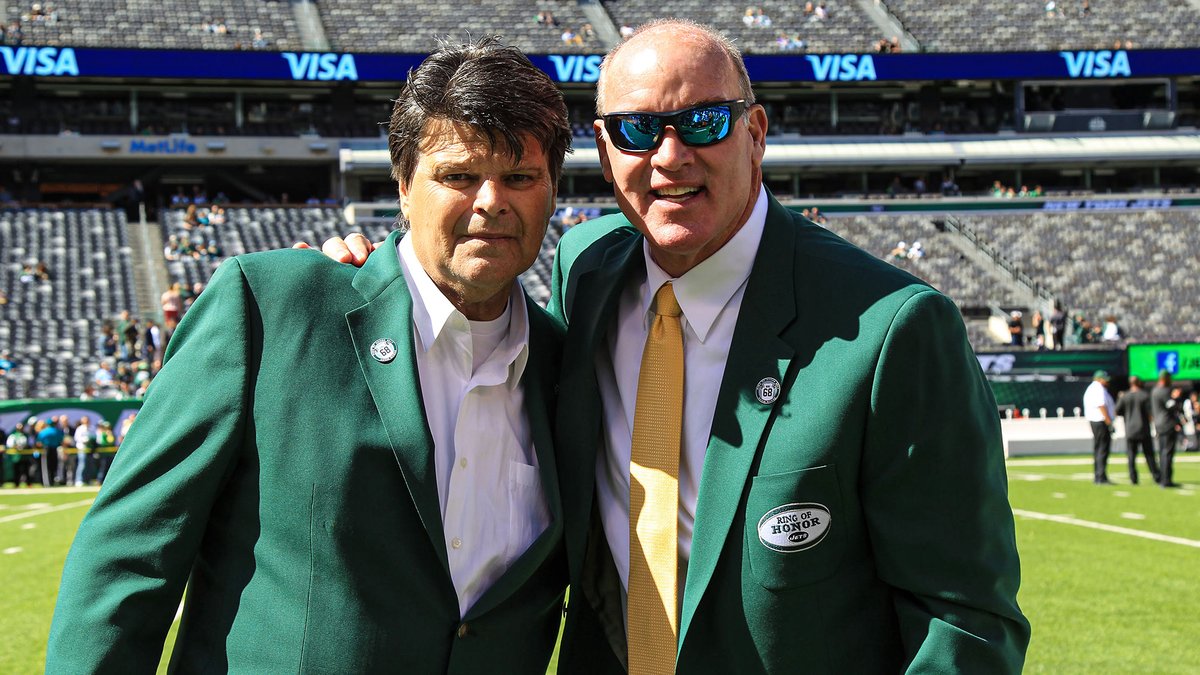
The roar of the crowd, the crack of pads, and then—the quarterback is down. For a brief, dazzling era in the early 1980s, few sights in professional football were as terrifyingly predictable or exhilaratingly consistent as the New York Jets’ defensive front. This wasn't just any line; it was a phenomenon, a cultural touchstone that etched itself into the annals of sports history. We're talking, of course, about the Sack Exchange, and diving into the Cultural Impact and Enduring Legacy of the Sack Exchange Unpacked reveals far more than just football statistics. It’s a story of innovation, personality, and a lasting imprint that reverberated from the playing field to the league's rulebook, and even into the hearts of former teammates decades later.
This wasn't just a defensive line; it was a market force, a disruptive entity that changed how we perceive pressure and celebrated its architects. Their story is a masterclass in how a quartet of individuals can transcend their roles, becoming symbols of an entire era and continuing to influence the game long after their cleats left the turf.
At a Glance: Why the Sack Exchange Still Matters
- Pioneering Defensive Dominance: Led the NFL in sacks in 1981, redefining aggressive pass rushing.
- Official Recognition: Directly influenced the NFL's decision to begin counting quarterback sacks as an official statistic.
- Cultural Icons: Four distinct personalities—Mark Gastineau, Joe Klecko, Marty Lyons, and Abdul Salaam—who captured the imagination of fans.
- Team & Individual Legacy: Key to the Jets' 1982 AFC Championship appearance, with members earning Hall of Fame nods, retired numbers, and Ring of Honor inductions.
- Enduring Human Story: Subject of an ESPN 30 for 30 documentary, highlighting complex relationships and a quest for reconciliation.
A Force Unleashed: The Genesis of a Gridiron Phenomenon
Imagine the NFL in the late 1970s and early 80s. While some defensive lines certainly made noise, none quite created the cacophony of the New York Jets' front four. Comprising the relentless Mark Gastineau, the powerful Joe Klecko, the steady Marty Lyons, and the often-overlooked but equally vital Abdul Salaam, this unit became more than the sum of its parts. They were drafted by the Jets across the mid-to-late 1970s—Salaam in '76, Klecko in '77, and Lyons and Gastineau in '79—slowly building into a formidable group.
The nickname itself, "The New York Sack Exchange," wasn't born in a marketing boardroom. It emerged organically, submitted by a fan, Dan O'Connor, in a 1981 pre-season contest. It was a stroke of genius, marrying the brute force of football with the financial hustle of the city. The moniker gained legendary status when the players were invited to ring the ceremonial opening bell at the New York Stock Exchange, symbolically linking their on-field prowess to the city's iconic marketplace of power and ambition. This moment, more than any other, cemented their place not just in sports lore, but in New York's broader cultural narrative.
Dominance on the Gridiron: Why Their Prowess Mattered
The Sack Exchange wasn't just clever branding; they delivered on the field. In 1981, they didn't just play well; they dominated, leading the entire NFL with an astonishing 66 sacks. This wasn't just a statistical anomaly; it was a statement. Quarterbacks learned to fear Sundays against the Jets. The pressure they generated was relentless, disruptive, and game-altering.
Their collective prowess wasn't just about individual talent, though each member was exceptionally gifted. It was about synergy. Gastineau's speed and dramatic "sack dance," Klecko's ability to play all defensive line positions with devastating effect, Lyons's consistent motor and leadership, and Salaam's anchoring strength created a unit that was nearly impossible to block with standard protections. This dominance propelled the Jets to significant success, most notably a deep playoff run that saw them reach the 1982 AFC Championship Game. While they ultimately fell short, their journey highlighted just how far a dominant defensive front could carry a team.
Beyond the Stat Sheet: Reshaping the Game Itself
The enduring legacy of the Sack Exchange extends far beyond their win-loss record or individual highlight reels. They fundamentally altered how the NFL understood and celebrated defensive play.
The NFL's Official Nod: Elevating the Sack
Perhaps their most significant and lasting impact was their direct influence on the league's data collection. Before the Sack Exchange, quarterback sacks weren't an officially tracked NFL statistic. Think about that for a moment: one of the most exciting and impactful plays in football wasn't formally acknowledged. The sheer volume and spectacle of the Sack Exchange's output, particularly their league-leading 66 sacks in '81, made it impossible to ignore. They didn't just get sacks; they made the sack a thing. The NFL took notice, and their collective prowess ultimately influenced the league to begin counting quarterback sacks as an official statistic, forever changing how we measure defensive impact and celebrate individual achievements. This single change alone underscores their profound and lasting Cultural Impact and Enduring Legacy of the Sack Exchange.
Changing Offensive Strategy: Adapt or Be Sacked
The Sack Exchange also forced a tactical evolution across the league. Offensive coordinators had to rethink their play calls, their blocking schemes, and their personnel. You couldn't simply rely on a tight end or running back to chip block these guys; it often took double teams, or even triple teams, freeing up other defenders. This forced the development of quicker passing games, more intricate pocket protections, and a greater emphasis on athletic offensive linemen who could handle the speed and power coming at them. In a very real sense, the Sack Exchange made NFL offenses smarter and more adaptable.
The Rise of the Defensive Lineman as Star
Before them, defensive linemen were often considered unsung heroes, doing the dirty work in the trenches. While respected, they rarely garnered the same spotlight as quarterbacks, running backs, or even linebackers. The Sack Exchange, particularly Gastineau's flamboyant persona and the group's collective media presence, changed that. They became stars in their own right, proving that defensive linemen could be compelling figures, capable of drawing crowds and selling merchandise. This paved the way for future defensive stars to receive the recognition and financial compensation they deserved, acknowledging the critical role they play in a team's success. For a deeper dive into the group's formation and triumphs, you can Explore the New York Sack Exchange.
The Complexities of Brotherhood: Inside the Huddle and Beyond
While their on-field dominance was undeniable, the human story of the Sack Exchange is far more intricate than just statistics. Like any group of high-achieving individuals, particularly in a high-pressure environment, their relationships were complex, often tense, and deeply personal.
The recently released ESPN 30 for 30 documentary, which premiered on December 13, 2024, delves deep into these dynamics. Co-directed by Ken Rodgers and James Weiner, the film explores the individual stories and viewpoints of Gastineau, Klecko, Lyons, and Salaam, revealing the nuances of their bond. It chronicles not just their shared glory but also their disagreements, their individual struggles, and the sometimes-conflicting personalities that both fueled their success and created friction.
The documentary famously documented a tense confrontation between Mark Gastineau and Brett Favre regarding a sack record, highlighting the competitive fire that continued to burn decades later. More poignantly, it culminated in a powerful reunion at the very place that gave them their name: the New York Stock Exchange. This wasn't just for show; it was designed to help the members "hash out old feelings" and make peace, a testament to the enduring, albeit sometimes strained, brotherhood they shared. Tragically, Abdul Salaam passed away months after his final interview for the documentary, adding a layer of poignancy and finality to his contributions to the film and the team's legacy.
Enduring Echoes: Legacy in Numbers and Lore
The Sack Exchange's influence didn't fade when they hung up their cleats. Their individual careers continued with varying degrees of success, and their post-playing days have been marked by significant honors that further cement their legendary status.
Abdul Salaam, after being replaced in 1983 and later traded, saw his professional career wind down. However, the core of Gastineau, Klecko, and Lyons continued to thrive. Gastineau and Klecko each earned two more Pro Bowl selections, showcasing their sustained excellence. Marty Lyons remained the longest-serving member, retiring after the 1989 season.
The ultimate recognition often comes in the form of enshrined legacies:
- Joe Klecko: His No. 73 jersey was retired by the Jets in 2004, a rare honor. He was inducted into the Jets' Ring of Honor in 2010 and, in a monumental recognition, was inducted into the Pro Football Hall of Fame in 2023, solidifying his place among the game's all-time greats.
- Mark Gastineau: Known for his speed and iconic sack dance, Gastineau was inducted into the Jets' Ring of Honor in 2012.
- Marty Lyons: The consummate team player, Lyons joined his teammates in the Jets' Ring of Honor in 2013. He also received national recognition with his induction into the College Football Hall of Fame in 2011, acknowledging his stellar career at the collegiate level.
These honors aren't just for individual achievement; they are acknowledgments of the collective power and enduring impact of the unit they formed. The "Sack Exchange" remains a benchmark, a gold standard against which future defensive lines are measured, both in terms of statistical output and their ability to capture the public imagination.
A Cinematic Revival: The 30 for 30 Effect
The ESPN 30 for 30 documentary on the Sack Exchange isn't just a recounting of history; it's an active part of their ongoing legacy. Documentaries like these serve a crucial role in historical preservation and cultural understanding. They introduce a new generation to these legends and offer existing fans a deeper, more personal perspective.
The film's focus on the "complex, often tense, relationships" among the players humanizes the legends. It shows that even the most dominant teams are composed of individuals with their own stories, struggles, and perspectives. The confrontation with Brett Favre, while perhaps uncomfortable, speaks to the competitive spirit that defined Gastineau. And the final reunion at the New York Stock Exchange, deliberately staged to facilitate reconciliation, provides a powerful narrative arc. It’s a testament to the idea that even decades later, the bonds forged in the crucible of professional sports, despite their challenges, still matter and can seek healing. Abdul Salaam's final interviews, recorded shortly before his passing, add a poignant and deeply moving layer to the narrative, ensuring his voice is heard as part of this seminal story.
This documentary reinforces that the Cultural Impact and Enduring Legacy of the Sack Exchange isn't static; it's continually evolving, being re-examined, and rediscovered by new audiences.
What Made Them an Enduring Legend? Common Questions Answered
When we look back at teams or units that achieve legendary status, certain questions frequently arise. The Sack Exchange is no exception.
Was it just talent, or chemistry?
It was undoubtedly both, a potent combination that elevated them beyond mere individual skill. Each player brought immense talent to the table: Gastineau's lightning-fast pass rush, Klecko's brute strength and versatility, Lyons's relentless motor and leadership, and Salaam's anchoring presence. However, their true genius lay in their ability to work as a cohesive unit. They understood each other's tendencies, flowed together, and collectively overwhelmed offensive lines. This chemistry wasn't always smooth sailing, as the documentary reveals, but when it mattered most, on the field, they were a unified force. The nickname itself hints at this: an "exchange" implies interconnected parts working together for a powerful outcome.
How did they influence player contracts or valuations?
While it's hard to draw a direct line to specific contract structures, the Sack Exchange certainly helped to elevate the perceived value of elite defensive linemen. By demonstrating how a dominant pass rush could single-handedly disrupt offenses and win games, they inadvertently made a case for higher salaries and greater recognition for players in their position. When the NFL started officially tracking sacks, it gave teams and agents a tangible metric to point to when negotiating, further professionalizing the valuation of these critical defensive roles. They were trailblazers not just on the field, but in how their performance translated into a greater appreciation for their position's economic worth.
Are there modern equivalents to the Sack Exchange?
The NFL sees many dominant defensive lines and individual pass rushers today, but few achieve the same level of iconic collective identity and cultural impact as the Sack Exchange. Units like the "Legion of Boom" secondary for the Seattle Seahawks or various powerful defensive lines (e.g., the early 2000s Buccaneers, the current 49ers) come close in terms of on-field dominance. However, the Sack Exchange's unique name, their direct influence on an official NFL statistic, and their placement within a specific era of football history give them a distinct, almost mythical quality that's hard to replicate. They weren't just great; they were transformative.
Carrying the Torch: Lessons from the Sack Exchange
The story of the Sack Exchange is more than just a nostalgic look at a bygone era of football. It's a testament to several timeless principles that resonate far beyond the gridiron.
First, it highlights the power of collective identity. By embracing a distinct nickname and purpose, this defensive line transcended individual fame to become a unified brand. This sense of shared purpose amplified their impact and cemented their place in popular culture. They weren't just players; they were the Sack Exchange.
Second, their story underscores the enduring impact of individual personalities. While their collective performance was paramount, the distinct characteristics of Gastineau's showmanship, Klecko's blue-collar grit, Lyons's quiet leadership, and Salaam's anchoring presence contributed immensely to their mystique and relatability. It showed that sports legends are not just athletes, but complex human beings who capture our imaginations.
Finally, the Cultural Impact and Enduring Legacy of the Sack Exchange serves as a powerful reminder of how innovation, even within an established sport, can lead to fundamental change. By relentlessly pursuing the quarterback, they didn't just win games; they forced the NFL to reconsider how it measured performance, ultimately making the game richer and more nuanced for generations to come. Their story invites us to appreciate the legends who not only excelled but who, through their sheer force of will and talent, reshaped the very fabric of their sport. Their legacy continues to be felt in every official sack tallied and every defensive lineman who takes pride in disrupting an offense.