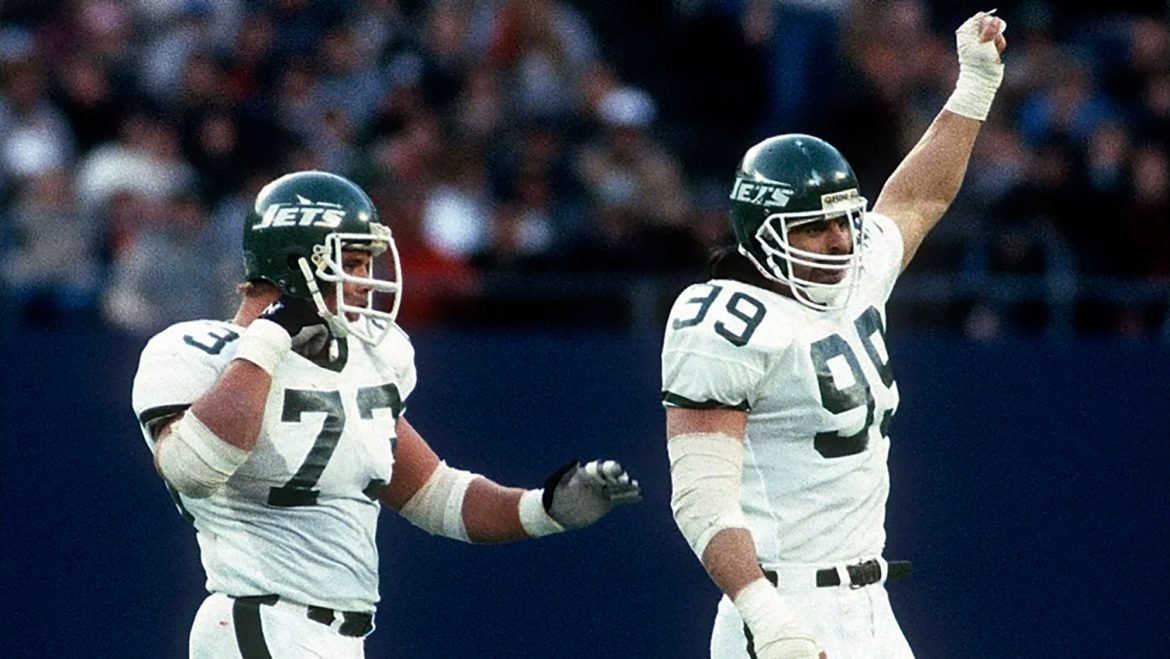
The stadium lights glared, the crowd roared, and opposing quarterbacks braced for impact. In the early 1980s, a defensive line emerged from the New York Jets that didn't just play the game—they changed it. Known universally as the New York Sack Exchange, this fearsome quartet of Mark Gastineau, Joe Klecko, Marty Lyons, and Abdul Salaam didn't just rack up impressive stats; their notable seasons and iconic games of the Sack Exchange carved a permanent niche in NFL lore, pushing the league itself to evolve.
They were ferocious, charismatic, and relentlessly disruptive. More than just a dominant unit, they became a cultural phenomenon, a symbol of aggressive, hard-nosed football that intimidated opponents and thrilled fans.
At a Glance: The Enduring Impact of the Sack Exchange
- Who they were: The New York Jets' legendary defensive line from the early 1980s: Mark Gastineau, Joe Klecko, Marty Lyons, and Abdul Salaam.
- How they got the name: A fan contest submission in 1981, inspired by their ceremonial bell-ringing at the New York Stock Exchange.
- Peak Dominance: Led the NFL with 66 sacks in 1981, reaching the AFC Championship Game in 1982.
- Lasting Legacy: Their ferocity helped prompt the NFL to officially count quarterback sacks as a statistic.
- Individual Recognition: Joe Klecko (Pro Football Hall of Fame, retired jersey), Marty Lyons (College Football Hall of Fame), and all three (Klecko, Gastineau, Lyons) in the Jets' Ring of Honor.
- Modern Re-telling: Subject of a new ESPN 30 for 30 documentary, "The Sack Exchange," that premiered December 13, 2024.
Forged in Fire: The Genesis of a Gridiron Gang
Every legend has an origin story, and for the New York Sack Exchange, it began in the trenches of the NFL Draft. While the Jets were building their roster through the late 1970s, they unknowingly assembled the pieces of one of football's most iconic defensive units.
It started with Abdul Salaam, a seventh-round pick in 1976. The following year, Joe Klecko joined him, selected in the sixth round. The final pieces arrived in 1979, with Marty Lyons as a first-round choice and Mark Gastineau as a second-rounder. Each brought a unique skill set and personality, but together, they formed an unyielding wall against opposing offenses.
The moniker "Sack Exchange" itself didn't come immediately. It was in 1981, a year after they began truly gelling, that the name truly stuck. Born from a fan submission to a team magazine contest, it was quickly embraced by Jets public relations director Frank Ramos, who included it in a press release. The name truly resonated after the quartet's ceremonial ringing of the opening bell at the New York Stock Exchange in November 1981—a symbolic fusion of Wall Street's aggressive trading floor and their relentless pursuit of quarterbacks. It perfectly captured their high-stakes, high-impact style of play.
The Reign of Terror: Notable Seasons and Dominance (1981-1982)
The Sack Exchange wasn't just a catchy name; it was a promise of pain for opposing offenses, a reputation built on exceptional performance during some truly notable seasons and iconic games of the Sack Exchange.
The Breakout Year: 1981's Sack Surge
The 1981 season marked the true ascendancy of the Sack Exchange. This was the year they didn't just make an impression; they made a statement. With Klecko's brute strength, Gastineau's explosive speed off the edge, Lyons's relentless motor, and Salaam's anchoring presence, they created havoc unlike anything the league had seen.
That year, the Jets defensive line led the entire NFL with an astounding 66 sacks. Quarterbacks constantly found themselves scrambling, hurried, or flat on their backs. The unit's dominance transformed the Jets into a legitimate contender, injecting a new level of excitement and fear into their games. Their collective performance laid the groundwork for the Jets' success and signaled to the league that a new era of defensive line play had arrived.
Championship Aspirations: The 1982 AFC Run
Building on their 1981 success, the 1982 season—though shortened by a players' strike—saw the Sack Exchange-led Jets make a deep playoff run. This was perhaps their most iconic season as a cohesive unit, culminating in an appearance in the AFC Championship Game.
The path to the championship game was paved with dominant defensive performances, showcasing their ability to control the line of scrimmage and dictate the pace of play. Every game became a testament to their strength and coordination. While they ultimately fell short in the AFC Championship, the journey itself, powered by their unyielding defensive line, cemented their place in Jets history and the broader NFL narrative. It was a season that proved their 1981 performance wasn't a fluke but the consistent output of a truly special unit. For more context on this historic group, you can delve into the full story of The New York Sack Exchange.
Beyond the Gridiron: Impact on the Game and Culture
The influence of the Sack Exchange extended far beyond individual games and seasons. Their dominance was so profound that it literally changed the way the NFL documented its own history.
Changing the Rules: The Official Sack Statistic
It might seem unbelievable now, but before the early 1980s, quarterback sacks weren't an officially recognized NFL statistic. Defenders could decimate offensive lines and terrorize passers, but their individual and collective sack totals weren't formally tracked by the league.
This changed, in large part, due to the sheer, undeniable impact of units like the Sack Exchange and contemporary players such as Lawrence Taylor. Their ability to consistently disrupt passing plays, pressure quarterbacks, and record takedowns forced the NFL to acknowledge the fundamental shift in defensive play. Recognizing the importance of this statistic in evaluating defensive talent and team performance, the NFL began officially counting quarterback sacks. This move forever altered how individual defensive players were evaluated and how defensive dominance was quantified.
A Cultural Phenomenon: Branding and Bell Ringing
The Sack Exchange was more than just a football unit; they were a brand. Their name, inspired by the high-stakes world of finance, symbolized their aggressive, high-reward approach to the game. The ceremonial ringing of the opening bell at the New York Stock Exchange wasn't just a photo opportunity; it was a cultural moment that blended sports and business, elevating their status beyond mere athletes.
This visibility, coupled with their relentless play, made them local celebrities and national figures. They represented a certain swagger and intensity that resonated with fans, turning every game into an event where the Sack Exchange's performance was eagerly anticipated.
Enduring Legacy: Honors, Documentaries, and Memories
Even after the core unit eventually disbanded—Abdul Salaam was replaced in 1983 and later traded, though Gastineau, Klecko, and Lyons continued their success for several more years—the impact of the Sack Exchange never faded. Marty Lyons was the last active member, retiring after the 1989 season, a testament to the longevity of some of the original members.
Individual Hall of Fame & Ring of Honor
The individual accolades for the members of the Sack Exchange underscore their profound talent and contributions:
- Joe Klecko: His No. 73 jersey was officially retired by the Jets in 2004, a rare honor. In 2023, Klecko received the ultimate recognition, being inducted into the Pro Football Hall of Fame, solidifying his place among the game's all-time greats.
- Marty Lyons: A standout collegian before his pro career, Lyons was inducted into the College Football Hall of Fame in 2011.
- Jets' Ring of Honor: Further cementing their status within the franchise, Joe Klecko (2010), Mark Gastineau (2012), and Marty Lyons (2013) were all inducted into the New York Jets' Ring of Honor.
These honors reflect not just their individual prowess, but the collective memory of what they achieved as a unit.
The "Sack Exchange" Book: An Oral History
The story of the 1980s Jets and their iconic defensive line is so rich that it inspired a book, "Sack Exchange: The Definitive Oral History of the 1980s New York Jets" by Greg Prato. This work offers an intimate look into the team, capturing the voices and memories of those who lived through that dynamic era, providing fans with deeper insights into the personalities and events that defined the Sack Exchange.
30 for 30: Reclaiming the Narrative
The enduring fascination with the Sack Exchange reached a new peak with the recent release of an ESPN 30 for 30 documentary, aptly titled "The Sack Exchange." Co-directed by James Weiner and Ken Rodgers and narrated by Method Man, the film premiered on December 13, 2024, bringing their story to a new generation of fans.
This documentary was a passion project for James Weiner, who had pursued the film for over two decades. Joe Klecko's 2023 Pro Football Hall of Fame induction served as a powerful catalyst, finally prompting ESPN Films to greenlight the project.
The film provides a comprehensive look at the unit, exploring not just their on-field ferocity and fame, but also the internal disagreements and complex dynamics among the players, particularly highlighting Mark Gastineau's compelling yet sometimes infuriating behavior. One poignant moment captured for the film, never before aired, shows Gastineau confronting Brett Favre about the 2001 play where Favre seemingly allowed Michael Strahan to break Gastineau's 1984 single-season sack record of 22.
Tragically, the documentary also captures a bittersweet moment involving Abdul Salaam. In April 2024, despite his declining health, Salaam made a 10-hour drive from Cincinnati to New York City to participate in recreating the iconic Stock Exchange photo for the film—a powerful testament to his connection to the group. He passed away in October of the same year at age 71, making his appearance in the documentary a final, indelible mark on his legacy.
Why They Mattered Then, and Why They Still Do
The New York Sack Exchange wasn't just a fleeting moment in sports history; it was a seismic event that reshaped perceptions of defensive football. Mark Gastineau, Joe Klecko, Marty Lyons, and Abdul Salaam were more than just a defensive line; they were pioneers who changed the game, forced the league to acknowledge their impact, and left an indelible mark on the culture of football.
Their story is one of raw talent, relentless drive, and the powerful chemistry that can elevate individuals to legendary status as a unit. They embodied an era of aggressive, flamboyant football that continues to captivate fans decades later. As the NFL evolves, the standard set by the Sack Exchange remains a benchmark for defensive excellence, a reminder that true greatness transcends statistics and becomes a permanent part of the game's soul.