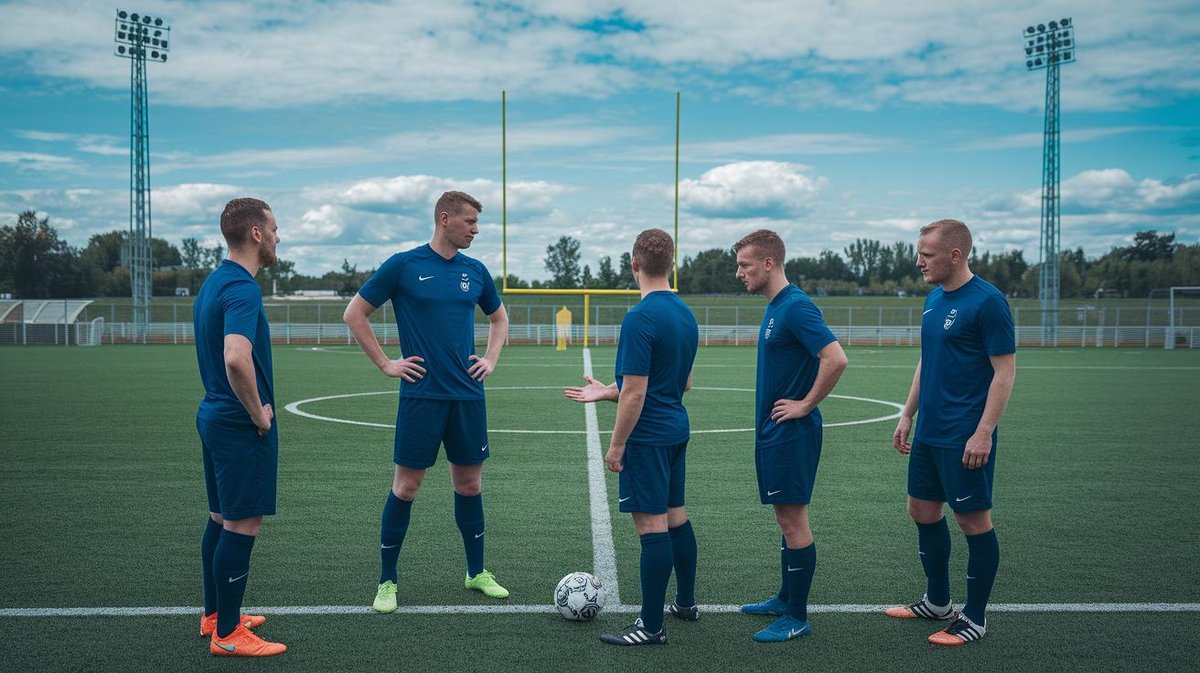
Tactical analysis isn't just a buzzword for coaches and pundits; it's the strategic blueprint that can elevate a team from good to dominant, particularly when it comes to Tactical Analysis: Dominance and Defensive Strategies. Imagine standing on the sidelines, not just watching the ball, but seeing the intricate dance of 22 players, each move a calculated risk or a planned response. This isn't magic; it's the power of understanding how teams operate, how they defend their space, and how they turn that defensive solidity into offensive leverage.
It's about dissecting the game to uncover its hidden mechanics – the invisible threads connecting every pass, every press, every decision. When you master tactical analysis, you stop being a passive observer and start seeing the game through the eyes of a strategist, understanding how smart defensive strategies lay the groundwork for overall dominance.
At a Glance: What You'll Learn About Tactical Analysis
- Why analysis is crucial: It’s the engine for performance improvement and strategic advantage in competitive sports.
- The core components: Understand formations, phases of play, player roles, and defensive systems.
- How to conduct analysis: A step-by-step guide from data collection to strategy adaptation.
- The role of technology: Leverage modern tools to unlock deeper insights.
- Mastering defensive strategies: Explore high press, mid-block, low block, and their applications.
- Real-world examples: Learn from tactical geniuses like Guardiola, Mourinho, and Klopp.
- Actionable steps: How to start your journey into tactical analysis and enhance your knowledge.
The Unseen War: Why Tactical Analysis is Your Ultimate Edge
In any competitive sport, raw talent will only get you so far. The true separator, the secret sauce that turns potential into consistent victory, is often found in the strategic depth of tactical analysis. It's the difference between merely reacting to what's happening and proactively shaping the narrative of the game.
Think of it as the ultimate mind game. While athletes battle on the field, coaches and analysts are engaged in their own high-stakes chess match, anticipating moves, exploiting weaknesses, and fortifying their own lines. This isn't about arbitrary decisions; it's about harnessing data and observation to create a formidable advantage.
Beyond Raw Talent: The Brain of the Game
We've all seen games where a team with seemingly less individual talent somehow manages to outwit and overcome a more star-studded opponent. Often, that's the result of superior tactical analysis and a perfectly executed game plan. It’s about leveraging every player's strengths, masking weaknesses, and creating a cohesive unit that's greater than the sum of its parts.
Tactical analysis provides invaluable insights into:
- Enhanced Performance: By pinpointing strengths and weaknesses, both individually and collectively, you can fine-tune techniques, optimize training, and identify performance trends.
- Strategic Advantage: It empowers you to dissect opponents' tactics, anticipate their moves, and devise counter-strategies, giving you a crucial competitive edge.
- Informed Decision-Making: Data-driven choices replace gut feelings for everything from game-time substitutions to long-term roster optimization. This applies to game plans, player selections, and in-game adjustments, ensuring every decision is backed by logic.
- Player Development: Analysis offers measurable feedback for skill development, tracking progress against goals, and identifying areas for growth.
- Injury Prevention: By monitoring athlete workload and identifying patterns, you can proactively manage fatigue and implement preventive measures to keep players healthy and on the field.
Deconstructing the Game: Core Elements of Tactical Analysis
To truly understand dominance and defensive strategies, you first need to break the game down into its fundamental building blocks. It’s like understanding the individual instruments before appreciating the symphony.
Formations and Fluidity: More Than Just Numbers
A formation (like a 4-4-2 or a 4-3-3) is merely a starting point, a numerical representation of where players begin on the field. The real magic happens in its fluidity – how a team's shape adapts and changes depending on the phase of play. Do full-backs push high to provide width in attack? Does a defensive midfielder drop between center-backs to create a back three when building from the back? These dynamic shifts are critical to analyze.
The Four Phases of Play: The Dynamic Cycle of a Match
A game isn't a continuous blur; it's a constant oscillation between four distinct phases:
- Attacking Phase: How a team builds play, progresses the ball, and creates goal-scoring opportunities.
- Defensive Phase: How a team prevents the opponent from scoring, organizes its shape, and closes down space.
- Transition to Attack: The immediate reaction and strategy when a team regains possession, aiming to exploit an opponent's disorganization.
- Transition to Defense: The urgent response after losing possession, focused on preventing a quick counter-attack and regaining defensive shape.
Analyzing how a team performs in each of these phases, and particularly how they switch between them, offers profound insights into their overall tactical approach.
Roles Reimagined: Every Player a Piece of the Puzzle
Gone are the days when a player's role was static. Modern tactical analysis delves into the specific responsibilities of each position within a chosen system:
- Goalkeeper: Beyond shot-stopping, they're often the first attacker, initiating play and acting as a "sweeper-keeper" to cut out danger.
- Center-backs: Not just defenders, they're crucial in organizing the backline and distributing the ball to start attacks.
- Full-backs/Wing-backs: Provide crucial width, supporting both offensive overloads and defensive solidity.
- Midfielders: The engine room, controlling tempo, linking defense and attack, and breaking opposition lines.
- Forwards: Tasked with creating and converting chances, but also pressing defenders and exploiting spaces behind the defense.
Understanding these nuanced roles and how players execute them is vital for effective analysis.
The Art of Defensive Strategy: From High Press to Low Block
Defensive strategies are at the heart of dominance. How a team attempts to win back possession and prevent scoring is a direct reflection of its tactical philosophy.
- High Press: This is an aggressive strategy where players push high up the pitch, often into the opponent's defensive third, to pressure the ball carrier immediately after possession is lost or even during the opponent's build-up. The goal is to win the ball back quickly in dangerous areas, leading to fast breaks or sustained pressure. It requires immense fitness, coordination, and bravery, as it leaves space behind the press vulnerable. Jürgen Klopp's Liverpool teams are famous for their high-octane "Gegenpressing" (counter-pressing), where players immediately swarm the opponent after losing possession to regain the ball quickly and punish disorganization.
- Mid-Block: A more balanced approach, the mid-block sees a team defend in the middle third of the pitch. Players maintain a compact shape, allowing the opponent to have possession in their own half but denying them easy access to the dangerous central areas or attacking third. The aim is to force mistakes, intercept passes, and launch counter-attacks from a more stable defensive structure. It's less physically demanding than a high press but requires excellent discipline and positional awareness.
- Low Block: This is a deep defensive strategy where a team retreats into its own defensive third, often with 8-10 players behind the ball. The goal is to deny space in and around the penalty box, forcing opponents wide or into long-range shots. It's a highly conservative approach, often used by underdog teams or when trying to protect a lead. While it sacrifices possession and attacking thrust, a well-organized low block can be incredibly difficult to break down, forming a "defensive wall" and setting the stage for swift counter-attacks. José Mourinho is a renowned proponent of this strategy, prioritizing defensive organization and structure above all else, often using a low block with compact defensive lines.
Analysts assess a team's defensive compactness, how effectively they close passing lanes, and their overall shape to determine the efficacy of these strategies. Just as a strong defensive line can stifle an opponent's attack, effective strategic planning is crucial in any competitive arena, including understanding the history of powerful defensive units like the one epitomized by About the New York Sack Exchange.
Building Out and Breaking Through: Offensive Complements to Defense
Defensive dominance isn't just about stopping the opponent; it's about what you do once you win the ball. How a team transitions into attack, builds play, and creates chances is a critical complement to its defensive strategy. This includes:
- Short Passing (Possession Play): Retaining the ball, moving opponents, and creating openings through intricate passes. Pep Guardiola is a master of "positional play," emphasizing specific zones for passing options and numerical superiority.
- Direct Play: Quick, long passes aimed at getting the ball into dangerous areas rapidly, often bypassing the midfield.
- Wide Play: Stretching defenses by using the full width of the pitch, creating space in central areas for attackers.
Set-Piece Tactics: Hidden Opportunities
Corners, free-kicks, and throw-ins are often overlooked but can be match-deciding moments. Tactical analysis involves studying pre-planned routines, player positioning, movement patterns, and delivery techniques during these situations, both offensively and defensively.
From Raw Data to Game-Winning Insights: The Analysis Process
So, how do you actually do tactical analysis? It’s a systematic process that transforms raw observations and data into actionable insights.
Setting Your Sights: Defining Objectives
Before you collect a single piece of data, clearly define what you want to achieve. Are you looking to improve your team's defensive efficiency? Gain a strategic advantage over a specific opponent? Enhance a player's passing accuracy? Clear objectives guide your entire analysis.
The Data Dive: What to Collect and Why
Identify and gather data for Key Performance Indicators (KPIs) relevant to your objectives. For defensive strategies, this might include:
- Defensive Efficiency: Goals conceded per game, shots on target conceded.
- Pressing Success Rate: Percentage of possessions won back in the opponent's half.
- Tackles/Interceptions: Number and success rate.
- Aerial Duels Won: Especially important for defending crosses and set pieces.
- Compactness Metrics: Average distance between defensive lines.
- Opponent Analysis: Their passing patterns, preferred attacking zones, weaknesses in transition.
Tech in the Trenches: Tools That Transform Analysis
Modern technology has revolutionized tactical analysis, turning mountains of data and hours of footage into digestible insights.
- Video Analysis Software: Tools like Hudl and Wyscout are indispensable. They allow coaches to break down footage frame-by-frame, tag specific actions (e.g., tackles, interceptions, defensive errors), create highlight reels, and generate detailed reports. This visual feedback is crucial for player development and tactical adjustments.
- GPS and Player Tracking Systems: Systems like Catapult monitor player movements, distances covered, speed, acceleration, and positioning. This data is vital for understanding physical performance, identifying fatigue, and assessing how well players adhere to tactical instructions regarding defensive shape and pressing intensity.
- Data Analytics Companies: Services like Opta and StatsBomb provide incredibly detailed statistical data on virtually every action in a game – passes, shots, defensive actions, duels, and more. This granular data allows for in-depth statistical modeling and trend identification.
- Tactical Boards and Software: Digital tactical boards (e.g., TacticalPad) allow coaches to visualize formations, draw up plays, and simulate scenarios, making it easier to communicate complex tactical instructions to players.
Teamwork Makes the Dream Work: Collaboration is Key
Tactical analysis isn't a solitary pursuit. Effective communication and collaboration among athletes, coaches, and support staff are paramount. Regular feedback sessions, team meetings, and individual performance reviews ensure that insights are shared, understood, and acted upon. When everyone is on the same page tactically, the team's defensive cohesion skyrockets.
Evolve or Perish: Iteration and Adaptation
The game is constantly changing, and so too must your strategies. Continuously refine and experiment with tactics based on results and outcomes. Embrace a growth mindset, learn from both successes and failures, and be prepared to adapt your approach. What worked last week might not work tomorrow, especially as opponents study your tactics.
Mastering Defensive Dominance: Strategies and Examples
Let's look at how some of the most iconic coaches have leveraged tactical analysis to build defensively dominant teams, each with a distinct philosophy.
The Mourinho Masterclass: Fortifying the Castle
José Mourinho is often synonymous with defensive solidity. His tactical masterclass focuses on defensive organization and counter-attacking. He often employs a low block, where his team sits deep, compacting space in their own half and making it incredibly difficult for opponents to break through. The emphasis is on disciplined positioning, numerical superiority in defensive areas, and blocking passing lanes. Once possession is won, the transition to attack is swift and direct, exploiting the space left by an overcommitted opponent. This strategy prioritizes eliminating risk and capitalizing on clinical counter-punches.
Klopp's Gegenpressing: The Best Defense is a Quick Offense
Jürgen Klopp popularized Gegenpressing (counter-pressing), a high-intensity defensive strategy that doubles as an offensive weapon. For Klopp, the moment a team loses possession is the optimal time to win it back, as the opponent is typically disorganized and mentally unprepared for immediate pressure. His teams swarm the ball carrier, pressing aggressively and collectively to force errors and regain possession high up the pitch, often leading to immediate goal-scoring opportunities. This strategy demands immense fitness, coordination, and a relentless work rate from every player.
Guardiola's Positional Play: Defense by Controlling the Ball
While Pep Guardiola's teams are renowned for their attacking flair, their defensive strength is often rooted in their possession-based positional play. By maintaining prolonged periods of possession and creating intricate passing triangles, Guardiola's teams effectively defend by denying the opponent the ball. When they do lose possession, their structure is designed for immediate counter-pressing to win it back quickly. The concept of "numerical superiority" in specific zones of the pitch, and overloading one side before switching play, also serves a defensive purpose by controlling space and dictating the opponent's movement. It's a proactive form of defense that limits the opponent's opportunities by starving them of possession.
Beyond the Soccer Pitch: Universal Principles
The principles of tactical analysis and defensive strategies aren't confined to soccer. Whether you're analyzing basketball defense, American football schemes, or even competitive esports, the core tenets remain:
- Define Objectives: What do you want your defense to achieve?
- Understand Roles: How does each player contribute to the defensive unit?
- Identify Weaknesses: Where can the opponent be exploited defensively?
- Formulate a System: High press, zone defense, man-to-man, full-court trap – a coherent strategy.
- Practice Transitions: How quickly do you switch from offense to defense, and vice versa?
- Adapt and Evolve: No strategy is foolproof forever.
These tactical masterclasses demonstrate that defensive dominance is a multifaceted concept, achieved through rigorous analysis and a clear, well-executed strategy tailored to a team's strengths and the opponent's weaknesses.
Common Questions & Misconceptions About Tactical Analysis
Let's clear up some common thoughts that might be holding you back from diving deeper into tactical analysis.
"Isn't it just for professional coaches and elite teams?"
Absolutely not! While pros use sophisticated tools, the fundamental concepts of tactical analysis are accessible to everyone. Whether you're a Sunday league coach, a fantasy sports enthusiast, or simply a passionate fan who wants to understand the game better, learning tactical analysis will enrich your experience. It's about developing a critical eye and asking "why" certain things happen on the field.
"Do you need expensive technology to do tactical analysis?"
Not necessarily. While professional teams benefit greatly from high-tech video analysis software and GPS trackers, you can start with basic tools. A pen and paper, a whiteboard, and a recording of a match are all you truly need to begin observing formations, tracking movements, and noting defensive patterns. Many free or affordable apps can help you draw tactics or tag simple actions. The most important "tool" is your analytical mind.
"Is tactical analysis only about finding weaknesses?"
While exploiting weaknesses is a significant part of the game, tactical analysis is equally, if not more, about understanding and maximizing your own team's strengths. It's about designing a system where your players can thrive, where their individual talents are amplified by collective strategy, and where your defensive setup not only stops opponents but also provides a springboard for your own attacks. It's a holistic approach to understanding the game's mechanics.
Your Playbook for Becoming a Tactical Analyst
Ready to move beyond the surface and truly understand the strategic depths of the game? Here’s how you can start sharpening your tactical analysis skills.
- Watch with Purpose: Don't just watch the ball. Pick a team or even just one player and focus on their movements when they don't have the ball. How do they position themselves defensively? What is their team's shape in possession? How do they react to transitions? Pause, rewind, and re-watch key moments.
- Read the Masters: Immerse yourself in the works of renowned tactical writers. Jonathan Wilson's Inverting the Pyramid is a classic that provides a historical perspective on tactical evolution. Many tactical blogs (e.g., StatsBomb, The Coaches' Voice) offer in-depth analyses of current trends and specific match breakdowns.
- Engage with the Community: Join online forums, tactical communities, or coaching courses. Discuss your observations, challenge your assumptions, and learn from others. The diverse perspectives will broaden your understanding.
- Practice Makes Perfect: If you're a coach, try implementing small tactical adjustments based on your analysis. Observe the outcomes and iterate. If you're a fan, try to predict tactical changes a coach might make at halftime and see if you were right.
The Continuous Game: Staying Ahead in Tactical Evolution
Tactical analysis is not a destination; it's a continuous journey. The beautiful game, and indeed all competitive sports, are always evolving, with new strategies emerging and old ones being reinvented. By consistently applying the principles of observation, data collection, critical thinking, and adaptation, you'll not only enhance your understanding of defensive dominance but also cultivate a strategic mind that can decipher the complexities of any competitive environment.
So, next time you watch a game, don't just see the score. Look deeper. See the shapes, the movements, the pressing triggers, and the defensive shifts. Understand the tactical battle playing out, and you'll realize that the true dominance often begins with a well-orchestrated defensive strategy.